
The Case for AI: Productivity, Augmentation, and New Opportunity.

Artificial intelligence has moved rapidly from theoretical promise to operational reality. Across industries, algorithms now screen résumés, write software, generate marketing content, optimize logistics, and assist in medical diagnostics. For many organizations, AI is no longer experimental—it is embedded in daily workflows.
This acceleration has revived a familiar question: is AI ultimately good or bad for the workforce? The answer, as history and science fiction alike suggest, is not binary. It depends on how AI is deployed, governed, and integrated into human systems of work. We examine companies from Europe, the USA, and China to learn from each, not to compare or take sides.
The Case for AI: Productivity, Augmentation, and New Opportunity
1. Productivity and Efficiency Gains
AI excels at pattern recognition, automation of repetitive tasks, and real-time optimization. In the workplace, this translates into faster decision-making, reduced error rates, and lower operational costs. Knowledge workers benefit from AI copilots that summarize documents, draft code, or analyze data at a scale no individual could match. Let’s look at SAP.
Case Study: AI-Driven Productivity Gains at SAP’s U.S. Operations
SAP, a global enterprise software company with a substantial U.S. workforce, has integrated AI capabilities across its software development and business process platforms. Facing pressure to accelerate innovation while maintaining enterprise-grade reliability, SAP deployed AI-assisted coding tools, automated testing systems, and intelligent documentation search across multiple product teams.
Within the first year of adoption, SAP reported measurable efficiency gains, including faster development cycles and reduced time spent on repetitive engineering tasks. Engineers retained decision-making authority, using AI as a copilot rather than an autonomous system. Rather than reducing headcount, teams reallocated effort toward higher-value activities such as system architecture, security, and customer-specific solutions.
This example demonstrates how AI, when applied as an augmentation layer, can improve productivity without undermining workforce stability—an outcome that contrasts sharply with dystopian science-fiction narratives and highlights a pragmatic path forward for enterprise AI adoption.
2. Job Augmentation Rather Than Replacement
In many roles, AI acts as an amplifier rather than a substitute. Engineers write better code faster, analysts explore larger datasets, and customer support teams handle more complex cases while routine inquiries are automated. Historically, technological shifts—from spreadsheets to the internet—have tended to reshape jobs before eliminating them outright.
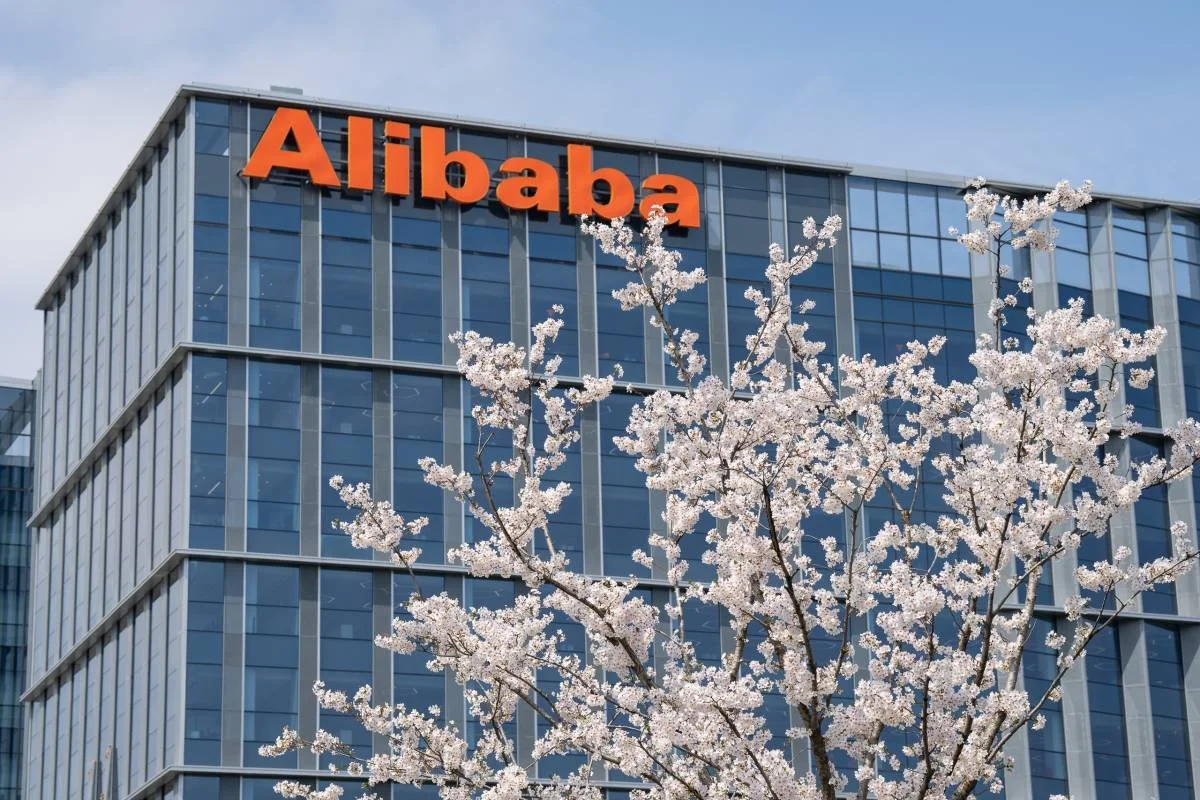
Alibaba Group
Case Study: Job Augmentation Through AI at Alibaba Group
Context
Alibaba Group, one of China’s largest technology and e-commerce companies, operates at massive scale across online retail, logistics (Cainiao), cloud computing (Alibaba Cloud), and digital services. Managing millions of merchants and consumers requires constant optimization of pricing, inventory, customer support, and logistics—tasks that are data-intensive but historically labor-heavy.
AI Implementation
Rather than replacing workers wholesale, Alibaba deployed AI systems to augment human roles, particularly in:
Customer service: AI chatbots handle routine inquiries (order status, refunds, basic troubleshooting), while human agents manage complex, emotionally sensitive, or high-value cases.
Merchants and operations: AI-driven demand forecasting, pricing recommendations, and inventory optimization tools support human decision-makers rather than autonomously controlling outcomes.
Logistics planning: AI models suggest routing and warehouse optimization, with final oversight retained by operations managers.
Outcomes
Higher productivity per worker: Customer service agents handle fewer repetitive requests and focus on problem-solving and relationship management.
Improved service quality: Faster response times for basic issues and better resolution rates for complex cases.
Workforce redeployment: Rather than large-scale layoffs, Alibaba retrained customer service staff into roles such as AI supervisors, quality reviewers, and merchant success advisors.
Workforce Implications
AI shifted the nature of work rather than eliminating it:
Frontline employees moved from scripted interactions to judgment-based roles.
New responsibilities emerged around monitoring AI outputs, correcting errors, and improving model performance.
Human expertise remained essential for trust, escalation, and nuanced decision-making.
Why This Matters
This case highlights a distinctly Chinese model of AI adoption: rapid deployment at scale, combined with deliberate human oversight in customer-facing and operational roles. AI is treated as an efficiency layer embedded into workflows, not as a fully autonomous replacement for labor.
In science-fiction terms, this approach resembles the controlled augmentation phase seen before loss-of-control narratives emerge. Unlike Blade Runner’s world—where human labor is marginalized and disposable—Alibaba’s model demonstrates how AI can be used to absorb scale and complexity while preserving human relevance, at least in the near term.
3. Creation of New Roles
AI adoption has already generated demand for new skill sets: prompt engineering, AI governance, model auditing, data ethics, and human-in-the-loop oversight. Entire job categories that did not exist a decade ago are now critical to enterprise operations.
From an optimistic perspective, AI represents what Transcendence imagined in its early stages: a tool that dramatically extends human capability, intelligence, and reach—before ethical guardrails are tested.

Reference to Transcendence 2014 film, starring Depp, Rebecca Hall, and Morgan Freeman, and directed by Wally Pfister.
Science Fiction as a Warning, Not a Blueprint
Science fiction has long explored the consequences of delegating agency to machines. In Blade Runner, technology is not the villain; indifference is. Human labor is cheap, disposable, and morally disconnected from the systems governing it. Transcendence raises a different concern: what happens when intelligence scales faster than wisdom or institutional control?
These narratives are relevant because they highlight that the danger is not AI itself, but misaligned incentives, power concentration, and lack of accountability.
The Next Three Years: A Geopolitical Perspective on AI Adoption
Artificial intelligence is no longer a long-term strategic asset; it is an immediate source of economic power, military relevance, and political influence. Over the next three years, the pace and quality of AI adoption will increasingly reflect national governance models, demographic pressures, and geopolitical constraints. The United States, Singapore, South Korea & Denmark illustrate four distinct paths—each with clear advantages and vulnerabilities.
United States: Innovation at Speed, Governance at Risk
Why the U.S. Will Succeed
The United States leads in foundational AI research, model development, and venture capital deployment. Its private sector—dominated by hyperscalers, startups, and enterprise software leaders—will continue to push rapid AI integration across industries. Over the next three years:
High Innovation Velocity: The federal strategy aims to reduce regulatory friction and accelerate AI adoption across sectors, potentially boosting productivity and competitiveness.
Talent Attraction: Initiatives like Tech Force and federal AI hires may help the government bridge its technical expertise gaps and stimulate broader employer demand for AI skills.
Global Leadership Focus: By streamlining policy and promoting AI exports, the U.S. seeks to shape international standards and influence global AI ecosystems.
A Strategic Federal AI Framework
In 2025, President Trump has positioned AI as a cornerstone of U.S. economic and national security strategy with the release of a comprehensive AI Action Plan titled Winning the AI Race: America’s AI Action Plan. This plan outlines federal priorities to accelerate AI innovation, build infrastructure, and lead internationally—emphasizing competitiveness, export of U.S. AI technologies, and workforce advantage.
In reference to USA 2025 Dec policy : https://www.whitehouse.gov/presidential-actions/2025/12/eliminating-state-law-obstruction-of-national-artificial-intelligence-policy/
Why the U.S. May Fail
The same market-driven dynamism creates structural weaknesses:
Regulatory Centralization Risks: Actions limiting state-level AI regulation may draw pushback from local governments and civil liberties advocates, potentially slowing adoption in certain jurisdictions.
Balancing Safety and Speed: Emphasizing innovation and deregulation can raise concerns about consumer protections, safety, and responsible use—issues that could impact worker trust and public acceptance.
Adoption Gaps: Despite policy focus, broader market data suggest that overall AI adoption among U.S. companies remains uneven in 2025, with larger enterprises leading while many small and medium businesses still lag

Blade Runner 2049 is a 2017 American sci-fi neo-noir film directed by Denis Villeneuve, written by Hampton Fancher and Michael Green.
In science-fiction terms, the U.S. risks a Blade Runner-style outcome—not because of advanced AI, but because social and institutional adaptation lags technological progress.
Singapore: Governance-Led Precision and Trust
Why Singapore Will Succeed
Singapore represents a high-trust, institution-led model of AI adoption. Over the next three years:
AI will be integrated into government services, finance, healthcare, and logistics with clear accountability frameworks.
Workforce reskilling will be systematically funded and coordinated.
Public trust will remain relatively high due to transparency and regulation.
Singapore’s small size allows it to move quickly without losing coherence.
Why Singapore May Fail
Singapore’s limitations are structural rather than strategic:
A small domestic market limits the scale of AI experimentation.
Dependence on foreign technology providers increases exposure to geopolitical supply-chain disruptions.
Conservative governance may slow adoption in areas where risk-taking is required.
Singapore will excel at using AI, but not necessarily at defining the global AI frontier. AI used widely, yet productivity gains remain untapped, according to research in Singapore.
Organisations miss out on about 55% of potential productivity gains due to disconnect between artificial intelligence (AI) adoption and workforce readiness, according to findings from the EY 2025 Work Reimagined Survey. Surveyed 15,000 employees and 1,500 employers in 29 countries, including 200 employees and 20 employers in Singapore.
9 of 10 employees use AI at work. 31% use it daily for searches, emails, and summaries; only 7% use it to improve workflows. Despite widespread use, worries remain: about 50% of Singaporeans fear over-relying on AI will weaken skills, and 40% worry about large-scale, realistic misinformation. Samir Bedi, EY Asean People Consulting Leader said cities adopting AI will only see productivity gains when organisations close anxiety and skills gaps. He urged employers to provide practical AI training and safe spaces for experimentation, noting secure, effective tools can bridge the disconnect.
South Korea: Industrial AI Under Demographic Pressure
Why South Korea Will Succeed
South Korea’s AI adoption is tightly linked to industrial competitiveness. Over the next three years:
AI will strengthen manufacturing efficiency, semiconductor design, and smart factories.
Labor shortages driven by demographic decline will accelerate automation.
Major conglomerates will integrate AI deeply into R&D and production systems.
AI in Korea is not speculative—it is operational necessity.
Why South Korea May Fail
The risks are tied to social and organizational structure:
Workforce polarization may increase if reskilling cannot keep pace.
Corporate hierarchies may slow decision-making and innovation.
Smaller firms may be unable to absorb the cost of AI transformation.
South Korea’s challenge is not adoption, but equitable diffusion across its economy.
Denmark: Human-Centered AI in a High-Trust Welfare State
Why Denmark Will Succeed
Denmark approaches AI adoption from a distinctly Nordic perspective: high institutional trust, strong labor protections, and close coordination between government, employers, and unions. Over the next three years:
AI will be integrated into public administration, healthcare, energy, and manufacturing with a strong emphasis on transparency and explainability.
Collective agreements and social dialogue will shape how AI is introduced into workplaces, reducing resistance from labor.
A robust social safety net and active labor-market policies will support reskilling and job transitions rather than abrupt displacement.
Denmark’s model emphasizes augmentation with consent, ensuring that AI improves productivity while preserving worker dignity and social cohesion.
Why Denmark May Fail
Denmark’s strengths also create constraints:
Strong regulation and consensus-driven decision-making may slow adoption in fast-moving sectors.
Small market size limits domestic scale and the ability to train or deploy frontier models.
Heavy reliance on EU-level regulation and foreign AI platforms reduces strategic autonomy.
Denmark is well positioned to manage AI responsibly, but risks falling behind in speed and global competitiveness if caution outweighs experimentation.
Integrative Insight: Denmark vs Singapore
Denmark and Singapore illustrate an important counterpoint to dominant AI narratives. While the United States and China compete on speed and scale, Denmark demonstrates how AI can be embedded into a mature welfare state without destabilizing the workforce. The risk, however, is strategic irrelevance: responsible AI does not automatically translate into AI leadership.
Over the next three years, Denmark is likely to succeed in avoiding the dystopian outcomes imagined in science fiction—but may struggle to influence how AI evolves globally. Its experience will matter less as a technological blueprint and more as a social one, offering a model for how advanced economies can adopt AI without sacrificing trust, equity, or human agency.
Final Insight
Taken together, these countries illustrate that AI’s story is not predetermined. While fiction often warns of runaway intelligence or dehumanized labor, the real-world narrative depends on governance, societal values, and deliberate human choice.
A Positive Outlook
Over the next three years, there is reason for optimism. Each nation—whether emphasizing speed, scale, trust, or human-centered governance—has pathways to harness AI for the benefit of workers and society. The shared lesson is clear: when innovation is paired with foresight, AI can amplify human potential rather than diminish it. Science fiction teaches us caution, but reality allows hope: across the globe, AI can be a tool for empowerment, creativity, and productivity—turning what could be a dystopian tale into a story of collaboration, adaptation, and progress.

Robot: Friend or Foe?
References:
https://www.alibabacloud.com/en/solutions/generative-ai?_p_lc=1
https://www.alizila.com/alibaba-international-aidge-ai-toolkit-adopted-half-million-merchants/
https://www.sap.com/sea/research/ai-drives-return-on-investment
https://sbr.com.sg/information-technology/news/organisations-miss-55-productivity-gains-ai-adoption
https://mindmatters.ai/2022/06/review-transcendence-the-soul-meets-the-singularity/
https://www.techpolicy.press/denmark-leads-eu-push-to-copyright-faces-in-fight-against-deepfakes/