
How does Alipay and Revolut win as a brand for billions of users?

In the competitive world of fintech, "customer service" is no longer just a support ticket or a phone line; it is the entire user journey. Two titans, Alipay and Revolut, have mastered this by turning service into a core brand asset. While they operate in vastly different markets, their success boils down to a single principle: removing friction before the customer even knows it exists.
Here is how these two giants use service to win the hearts—and wallets—of millions.
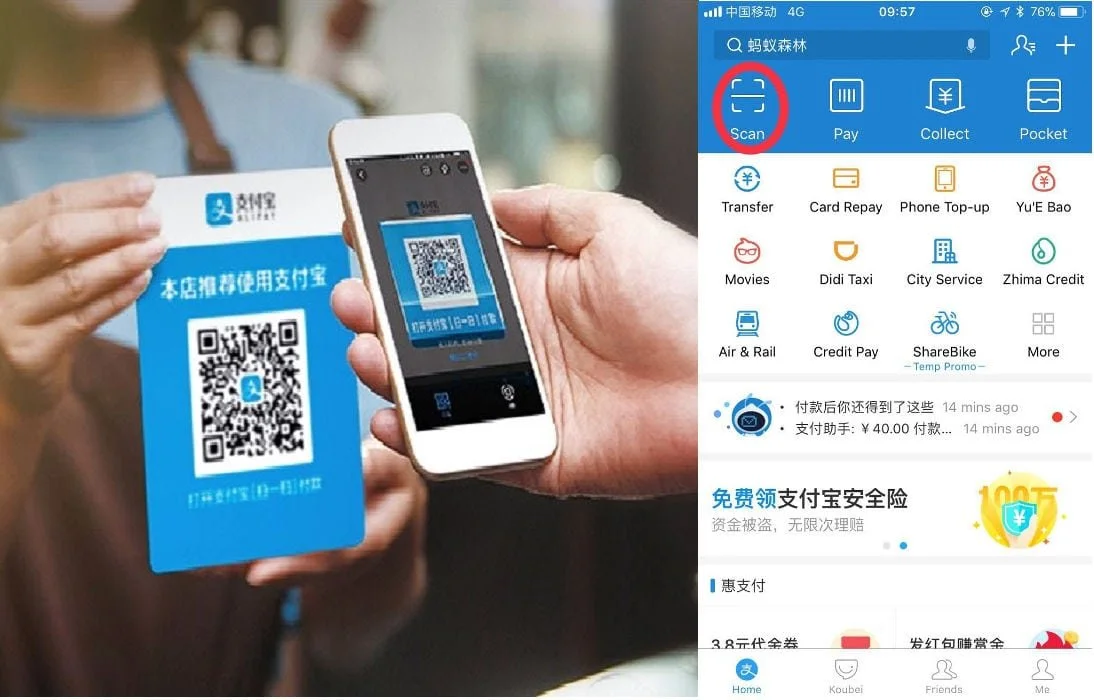
Alipay Scan to pay.
Source by: https://www.saporedicina.com/english/alipay-alibaba-payment-platform/
1. Alipay: The "Invisible" Service Ecosystem
Alipay’s strategy is built on proactive empowerment. In China, Alipay isn’t just a payment app; it is a "Super App" that handles everything from utility bills to insurance. Their customer service wins by being invisible—integrating support directly into the lifestyle of the user.
Case Study: Trust through Escrow and Automation
The Challenge: In its early days, the biggest barrier to e-commerce in China was a lack of trust between buyers and sellers. In recent years, Alipay has greatly improved its customer service and made the app more user-friendly.
The Service Solution: Alipay pioneered a "service-first" business model by acting as an escrow agent. They didn't just process payments; they held the money until the customer confirmed they were happy with the product.
The Result: This transformed "customer service" from a reactive department into a structural guarantee. By building the service into the transaction itself, they eliminated the need for thousands of "where is my refund?" calls.
Brand Win: Alipay became synonymous with Security. Today, they use AI chatbots (powered by Ant Group’s massive data lake) that resolve over 95% of inquiries without a human, yet feel personalized because they "know" the user's transaction history instantly.
East and West Seamless transactions: Alipay Local partners with Chinese banks to enable seamless transactions, and for customers using foreign banks, a straightforward registration process also lets them make payments easily especially for businesses.
2. Revolut: The "Empowerment" Engine
While Alipay dominates through scale and integration, the UK-born Revolut wins through transparency and control. For Revolut, great service means giving the user the tools to fix their own problems in real-time.
Case Study: Instant Control and Global Agility
The Challenge: Traditional banking customer service is notoriously slow, especially regarding fraud or international travel issues (e.g., "I'm in Italy and my card is blocked” Or “my passport is rejected”)
The Service Solution: Revolut moved the "Service Desk" into the palm of the user's hand. Features like instant card freezing/unfreezing, disposable virtual cards for secure shopping, and real-time spending notifications allow users to "self-serve" their security.
The Result: When a user loses their card, they don't have to wait on hold for 30 minutes; they toggle a switch in the app. This autonomy is the highest form of customer service.
Brand Win: Revolut built a brand around Speed and Freedom. By automating the "boring" parts of banking (KYC checks that take minutes, not days), they’ve attracted over 45 million users who value efficiency over a physical branch visit.
To compare Alipay and Revolut from a business perspective, we must look at how they engineer their internal processes to maximize "Customer Success." For a business, success isn't just a happy customer; it’s a customer who is onboarded quickly, transacts frequently, and requires minimal manual support.
The Strategic Process Map: Alipay vs. Revolut
1. Onboarding & "Time to Value" (KYB)
The first "service" a business experiences is how hard it is to actually start giving the fintech money.
Alipay (The Integrated Ecosystem):
Process: Alipay leverages the Alibaba ecosystem. If a business is already on Taobao or Tmall, much of their data is pre-populated. For new merchants, they use a "Mini-Program" model where businesses can set up a storefront inside Alipay in minutes.
Success Metric: Speed to Market. By lowering the barrier to entry with QR-code-only setups (no hardware needed), Alipay turned millions of "unbankable" street vendors into digital merchants.
Revolut (The Modular Gatekeeper):
Process: Revolut uses a tiered, automated KYB (Know Your Business) flow. They use APIs to pull data directly from national registries (like Companies House in the UK). If your business is "standard," you can be approved in hours.
Success Metric: Frictionless Compliance. Revolut wins by making the most painful part of business banking (the paperwork) disappear into a sleek mobile UI.
2. Transaction Flow & Trust Engineering
How the process handles the "moment of truth" (the payment).
Alipay: The Escrow Anchor
Process: Their core process is intermediated. When a business sells a product, Alipay holds the funds until the buyer confirms receipt.
Business Value: This process eliminates the "customer service" cost of handling fraud disputes. The system is the judge and jury, reducing the need for human intervention in 90% of disputes.
Revolut: The Multi-Currency Engine
Process: Their process is direct and real-time. They provide businesses with sub-accounts in 25+ currencies with "interbank" exchange rates.
Business Value: For an SMB, the "service" is the cost saving. By automating the FX (Foreign Exchange) process, Revolut removes the need for a business to hire a treasury manager or call a bank to lock in rates.
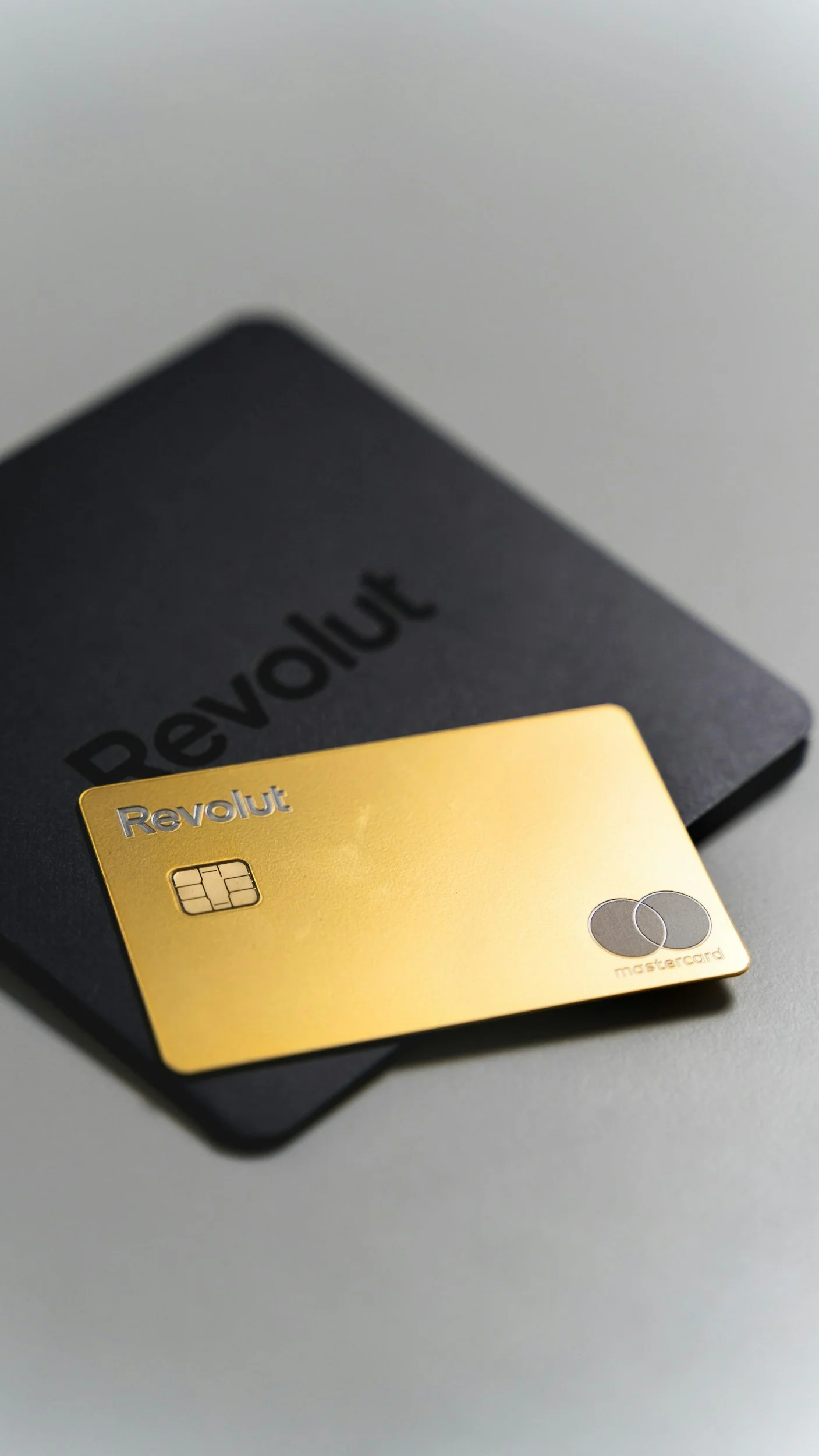
Revolut: Self-Serve Power
3. Issue Resolution: Chatbots vs. Controls
When something goes wrong, how does the process respond?
Alipay: AI-First Resolution
Process: Alipay uses a massive AI "Service Cloud." Because they have data on the user’s location, past purchases, and even social credit, the bot doesn't ask "Who are you?" It says "I see your payment at Starbucks failed; click here to fix."
The Win: Scalability. One "service" architecture supports 1 billion users.
Revolut: Self-Serve Power
Process: Revolut’s "service" process is actually a product feature. Instead of calling support to report a stolen business card, the process is: Open App -> Freeze Card -> Order New Card. * The Win: Efficiency. The best customer service is the one the customer can perform themselves in 3 seconds.
The Verdict for Businesses
Choose Alipay's Model if you want to win through omnipresence. Their success is in being everywhere the customer is, so service becomes a natural part of the environment.
Choose Revolut's Model if you want to win through utility. Their success is in giving the user "superpowers" to manage their own service needs through a superior interface.
References:
https://en.komoju.com/blog/payment-method/alipay/
https://www.ciw.news/p/alibaba-alipays-fintech-revolution
https://stripe.com/resources/more/alipay-an-in-depth-guide