
The rise of GEO, replacing SEO in the near future.
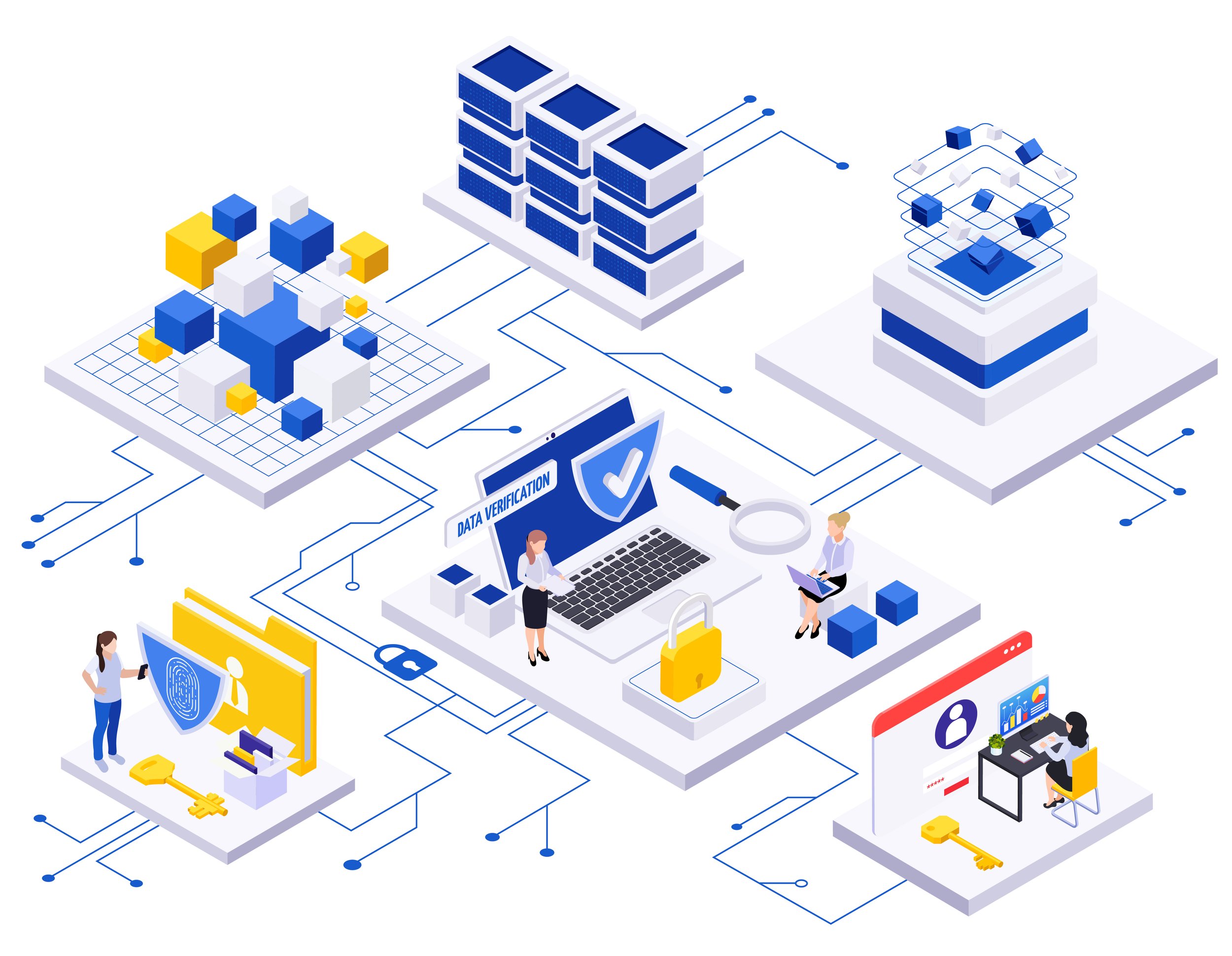
Marketing in 2026 is defined by the convergence of artificial intelligence, search engine optimization, and geo-targeted strategies. These three forces are reshaping how brands discover audiences, craft messages, and measure outcomes. The result is a marketing landscape that demands technical fluency, ethical clarity, and a renewed emphasis on locally relevant experiences delivered at scale.
Rise of AI: From augmentation to autonomous marketing AI moved past experimental pilots in 2024–2025 to become the operational backbone of modern marketing by 2026. This shift includes several distinct developments:
Generative content at scale: Large multimodal models now produce high-quality copy, imagery, audio, and short-form video tailored to brand voice. Marketers use AI to draft campaign concepts, produce A/B variants, and localize creative across languages and cultures within minutes. The ability to produce many variations enables systematic testing and personalization without proportionally increasing creative budgets.
Predictive and prescriptive analytics: AI systems synthesize first-party and permitted third-party data to forecast customer lifetime value, churn risk, and propensity to convert. Prescriptive models recommend next-best actions — which channel, which message, what offer, and when — allowing marketers to automate complex, cross-channel journeys while preserving strategic oversight.
Real-time decisioning: Edge computing and improved model optimization let organizations make personalization decisions in milliseconds at the point of interaction. This enables dynamic website content, personalized product recommendations in apps, and individualized ad creative served in programmatic buys.
Creative-human collaboration: The role of creative teams shifted toward prompt engineering, narrative strategy, and quality control. Skilled humans craft high-level brand frameworks and select AI-generated options that align with long-term identity and compliance needs. AI speeds iteration, but brand stewardship remains human-led.
Ethical and regulatory frameworks: With increased AI use came heightened scrutiny. Brands must navigate consent, explainability, and AI output transparency. Companies invest in governance: model documentation, bias audits, and human review loops to ensure ethical use and regulatory compliance.
1. The Death of SEO and the Rise of GEO
By now, the traditional "blue link" search result is a relic. Consumers no longer "search" for products; they ask their AI agents for solutions.
The Fundamental Shift: Rankings vs. Citations
To understand the difference, think of SEO as a library index and GEO as a research assistant.
SEO (Search Engine Optimization): Focuses on "The Blue Links." The goal is to make your webpage appear at the top of a Search Engine Results Page (SERP) so a human will click it. Success is measured in Click-Through Rate (CTR) and Organic Traffic.
GEO (Generative Engine Optimization): Focuses on "The Synthesized Answer." The goal is to have your brand’s data, statistics, or unique insights pulled into an AI’s response (on ChatGPT, Gemini, or Baidu). Success is measured in Citation Share and Brand Mention Volume.
Why the "Rise of GEO" Matters in 2026
The reason GEO is dominating the conversation is the Zero-Click Reality. In 2026, over 60% of search queries are resolved without the user ever clicking a website.
From Keywords to Entities: AI models like Baidu’s ERNIE or Google Gemini don't just look for words; they look for "Entities" (Your Brand, Your Founder, Your Specific Service). GEO is about building a reputation in the "Knowledge Graph" so the AI knows you are the authority.
The "Citation Moat": If an AI says, "According to research by Bright Design Studio, GEO increases visibility by 40%," that brand mention is worth more than a thousand keywords. It builds instant trust.
Human-First Context: LLMs are trained on human patterns. GEO rewards content that has a "Human Premium"—original research, expert quotes, and case studies—which AI can't easily hallucinate.
The Next Step for Your Strategy
The bridge between these two worlds is Structured Data (Schema). By marking up your site correctly, you tell both traditional crawlers and modern AI agents exactly what you offer. SEO is the Foundation: It makes your content "Findable." GEO is the Expansion: It makes your content "Usable" for AI.
2. How the Titans are Winning: SAP, HubSpot, and Baidu
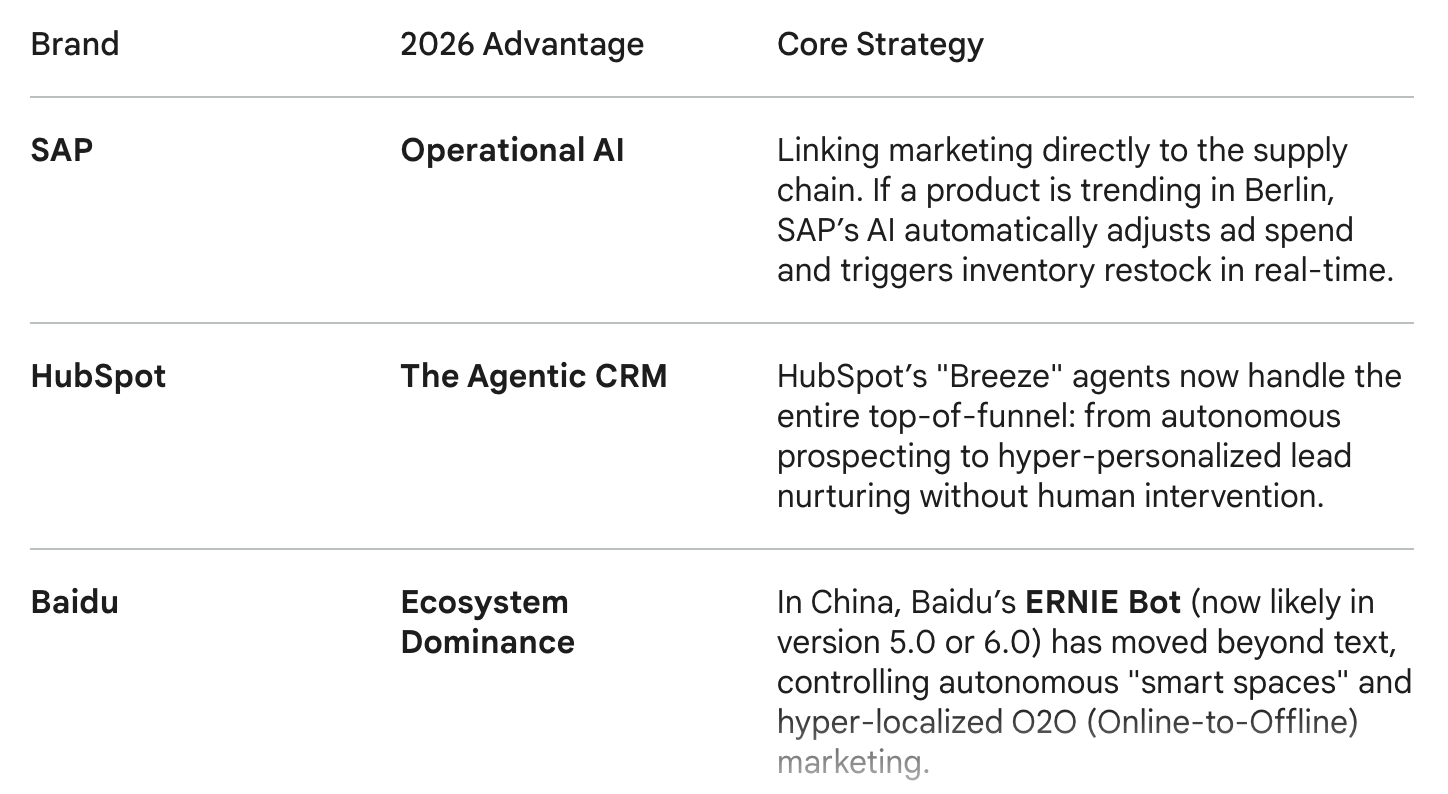
The leading tech giants have moved from "AI-enabled" to "AI-native." Here is how they are maintaining their edge:
SAP: The "Truth" Engine
SAP has solved the biggest problem in marketing: Fragmented Data. By embedding AI into the ERP (Enterprise Resource Planning), they’ve made marketing a financial science. Their advantage lies in "Business AI"—ensuring that every marketing dollar spent is backed by real-time inventory and margin data.
HubSpot: Scalable Empathy
HubSpot has doubled down on the SMB (Small to Medium Business) sector. Their advantage is making complex AI feel "human." In 2026, their platform doesn't just send emails; it uses "Social Listening Agents" to join conversations on decentralized platforms and Reddit-style communities to build brand rapport naturally.
Baidu: The Gateway to the East
For any brand entering the Chinese market, Baidu remains the gatekeeper. Their advantage is Multimodal Search. In China, users search with voice, images, and even "intent-gestures." Baidu’s deep integration with local hardware and smart cities makes them indispensable for "Zero-Click" marketing.
3. The "Human Premium" in an AI World
Social platforms feel unstable and algorithms are unreliable. People are tired of making content that vanishes quickly.
By 2026, strong personal brands stop chasing every platform. Creators are moving to spaces they control — newsletters, websites, and communities — which is why platforms like Substack are growing. By early 2026, Substack has grown from a newsletter tool into a multi-format "trust platform." Its growth now comes more from internal network effects than from social media traffic. Network-Driven Discovery: Top creators report that up to 78% of new subscribers come directly from recommendations by other Substack authors, underscoring how referral networks and peer endorsements drive audience growth.
AI content is pushing people to reclaim their unique voice. Audiences prefer honesty, doubt, and imperfection over polished distance. The best approach: use AI for 80% (data, logistics, personalization) and keep 20% human for creative work and community.
The Verdict: No Best Market, Only Best Partners
There is no "perfect" region or platform to start your 2026 expansion. Whether you are leveraging SAP’s enterprise power in Europe, HubSpot’s agility in North America, or Baidu’s reach in China, the complexity is high.
This is where Bright Design Studio comes in.
We don’t just "set up" accounts; we architect your 2026 Agentic Strategy. From navigating the technical GEO requirements of Baidu to orchestrating HubSpot’s autonomous agents, we ensure your brand doesn't just survive the AI shift—it leads it.